



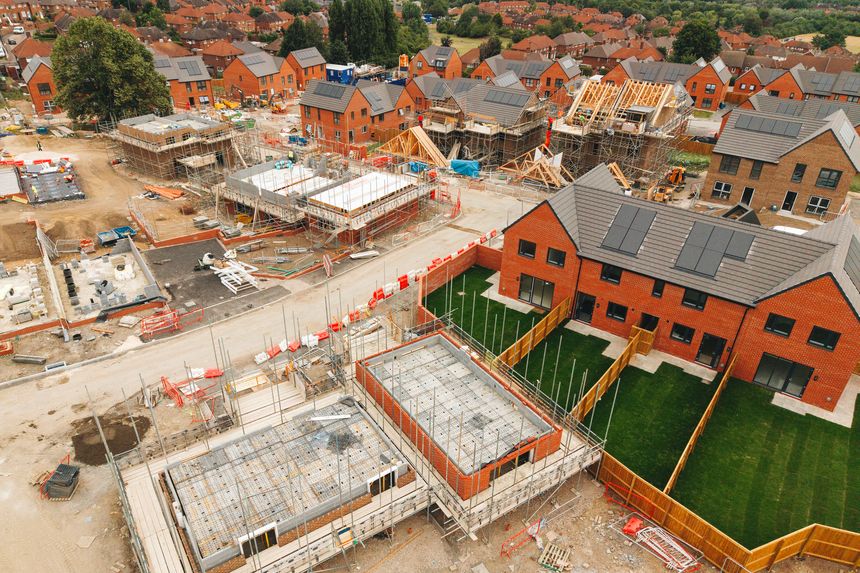

In October 2025, the government and Mayor of London announced a selection of emergency measures designed to support housebuilding in London. The finalised emergency measures were published on 25 March 2026. The Support for Housebuilding LPG, which is now live, brought in the changes to the London Plan for density constraints, time-limited changes to cycle parking standards and requirements and the new time-limited planning route (set out below). The emergency measures also include time-limited CIL relief and widening Mayoral powers (also set out below) which will be brought in by secondary legislation as early as May 2026. The majority of the emergency measures are anticipated to apply until 31 March 2028which is when the new London Plan is expected to be adopted, with CIL relief applying until 31 March 2030 with the Mayor's increased call-in powers intended to remain.
The government has recognised that housebuilders are facing significant challenges including high interest rates, increasing costs of construction, fire regulation uncertainty and having to deal with fast changing policy. With these emergency measures the government aims to boost the number of new homes that are being delivered by extant schemes and also by existing developments that have stalled or become unviable.
The Emergency Measures
- A new time-limited planning route – this now enables developers to secure planning permission without a viability assessment on private land where they commit to at least 20% social and affordable housing (the threshold was previously between 35% – 50%) of which a minimum of 60% must be Social Rent (except for Build to Rent which has different tenure rules). This route removes mid and late-stage viability reviews and developments are instead just subject to an early-stage review (which will be set out in the applicable section 106 agreement). This route will not apply to sites in, or released from, Green or Grey Belt and also will not apply to student accommodation/purpose built shared living developments. This route can be taken by eligible planning applications submitted and validated by 31 March 2028. Local planning authorities are strongly encouraged to support applications that meet the minimum levels of social and affordable housing and comply with the eligibility criteria following the new time-limited planning route, for new and existing schemes.
- Temporary and targeted partial CIL relief – CIL relief (only applicable to borough CIL and not Mayoral CIL) for schemes providing 20% or more affordable housing where the developer can demonstrate through a submitted summary viability appraisal that the scheme is otherwise unviable. CIL Relief will only apply to residential floorspace (but this can be within mixed use developments) and will not apply to student accommodation and co-living developments. The government's response to the consultation on the proposed emergency measures included that the CIL relief will only apply where the borough CIL liability exceeds £500,000. The proposed CIL relief will be 50%, which can increase to a maximum of 80% relief where at least 35% affordable housing is delivered. We await confirmation through the secondary legislation. This will apply to eligible schemes commencing before 31 March 2030.
- Temporary removal of parts of the London Plan Guidance which constrain density – this includes the removal of housing standards relating to dual aspect dwellings and the number of units around the core, as well as amendments to cycle storage requirements.
- Widening mayoral powers – the Mayor will have two additional planning powers. Boroughs are to refer planning applications for 50 or more homes to the Mayor when they are inclined to refuse the application. Secondly, the Mayor could call-in the development of a building of 1,000m² or more in the Green Belt or Metropolitan Open Land (if a London borough is likely to refuse). Secondary legislation will be brought forward immediately, and the new powers will come into force in May.
- The establishment of a £324 million City Hall Developer Investment Fund – this is to be used to intervene in stalled sites to deliver housing as soon as possible with priority going to schemes that can deliver completed houses by summer 2029 or earlier. The fund is supposed to become available in the 2026-2027 financial year.
The government and GLA are going to monitor the take-up of these emergency measures and assess delivery outcomes to see how effective these emergency measures are in practice. This is a positive step to support housebuilding, but the emergency measures are unlikely to be radical enough to address the systemic issues facing the industry.
This is for information purposes and does not constitute legal advice. If you would like further information or to discuss this please contact:
Jade.Chalmers@howardkennedy.com
or Bob.Sadler@howardkennedy.com
or Danielle.Coglin@howardkennedy.com
/Passle/57bd9d773d94740310eec5b7/SearchServiceImages/2026-10-01-13-38-32-531-6abe6258d635d8950c18282e.jpg)
/Passle/57bd9d773d94740310eec5b7/SearchServiceImages/2026-09-14-16-42-45-391-6aa82405297ecfc193b2c8d1.jpg)
/Passle/57bd9d773d94740310eec5b7/SearchServiceImages/2026-07-22-14-25-59-184-6a60d2f7bf22c590eca58ec1.jpg)